 Come back
Batteries, digital twins and the Asset Administration Shell: how the digital battery passport is built technically
Este contenido está disponible únicamente para socios BAIDATA.
Regístrate o accede con tu cuenta para verlo.
Come back

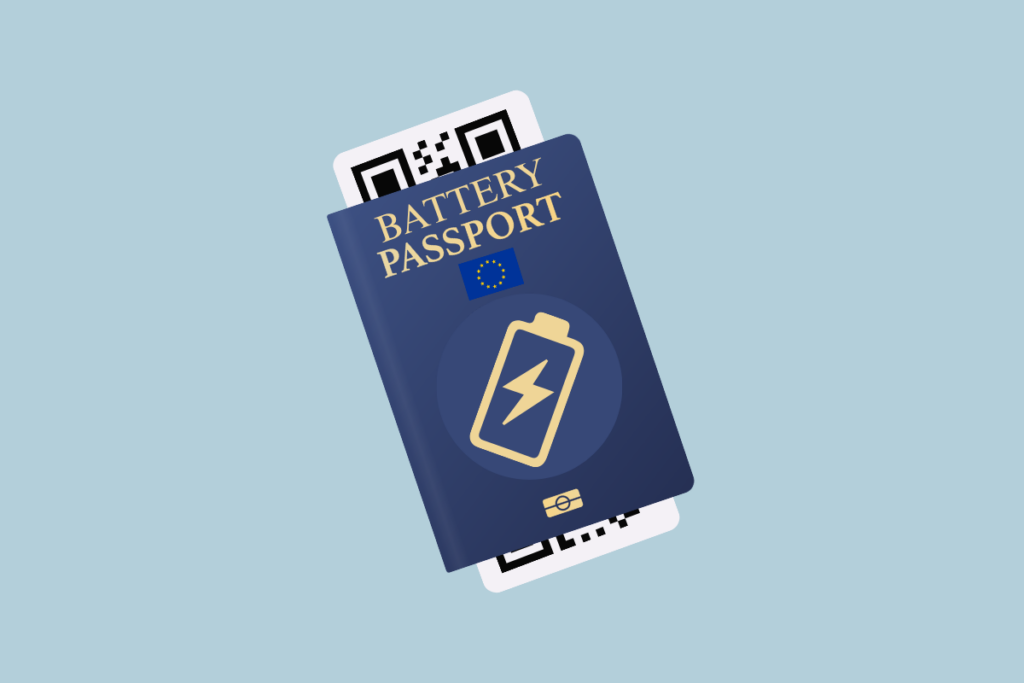
If you manufacture or manage industrial batteries, light mobility batteries or electric vehicle batteries, you will probably have already marked this date on your roadmap: 18 February 2027. From that date onwards, the DPP (Digital Product Passport) for batteries will be mandatory. The operational challenge is not just about complying with the regulation, but about how to structure and share this data to ensure full interoperability across the value chain.
The solution gaining the most traction within the industry – jointly driven by the Industrial Digital Twin Association (IDTA), the Catena-X network and the International Manufacturing-X Council (IMXC) – involves integrating it into a standardised digital twin (Asset Administration Shell, AAS) that operates directly within a data space.
From the digital twin to the Asset Administration Shell
A digital twin is, put simply, the digital representation of a physical asset that remains synchronised with that asset throughout its life cycle. The main obstacle to its adoption has historically been the lack of a common format that would allow information to be shared between companies without losing control.
The AAS standard resolves this bottleneck by defining a shared structure that organises information into independent sub-models (carbon footprint, technical data, materials). As the IMXC emphasises, the true potential of this architecture is realised when these sub-models are connected to a dataspace. This convergence enables the establishment of globally validated identities and sovereign access agreements: each company decides who may access its information and under what conditions.
When applied to your production (the battery) the DPP ceases to be an isolated data record and becomes a sub-model of the battery’s digital twin. By integrating it into a data space, your company connects to a Digital Value Chain Network (DVC), leveraging a trusted, federated infrastructure that is already in place.
Anatomy of the battery DPP sub-model
The joint specification translates the requirements of the Batteries Regulation into AAS sub-models underpinned by the semantics of the Semantic Aspect Meta Models (SAMM).
In an interconnected ecosystem (such as that proposed by Manufacturing-X), this architecture enables supply chain stakeholders to securely access critical data:
From the factory to the workshop: true interoperability
The value of the AAS + Dataspace ecosystem is evident throughout the entire life cycle. If a buyer of a used vehicle scans the battery’s QR code, they instantly gain access to its verified status and remaining service life.
This same standardised structure enables a workshop to assess repairs, an operator to plan a second life in stationary applications, or a recycler to identify which materials to recover. Thanks to the Dataspace connector (such as the one based on Eclipse Dataspace Components – EDC), these transactions are carried out in accordance with the usage policy defined by the original manufacturer.
Engineering firms are already automating this workflow: through ETL processes on the assembly line, each battery generates its own digital twin and is indexed in a distributed ledger, a scheme analogous to the future European battery passport register.
A benchmark model for industrial sovereignty
The batteries sector is leading the way for other sectors set to adopt the DPP in the coming years.
The lesson for SMEs and clusters is clear: a product passport is not a static document, but a living sub-model within a digital twin connected to a sovereign dataspace. Relying on AAS standards and Manufacturing-X frameworks provides you with a robust technical framework that safeguards your investment, protects your intellectual property and facilitates your company’s entry into the European data economy.
The BAIDATA Association and the Innovalia Association, as part of the CIRPASS-2 project’s activities, have been working on a technical paper that describes how data spaces, Asset Administration Shells (AAS) and European business wallets create a scalable and sovereign ‘Internet of Product Data’ that turns compliance with the Digital Product Passport (DPP) into a driver for the circular economy and competitiveness across all European industries. By showcasing practical implementations across various sectors, from textiles to semiconductors, it provides the architectural model for secure and interoperable data exchange between companies throughout global supply chains.
The key findings and results of the report will be presented by Jesús Alonso, director of the BAIDATA Association, at the DPP Festival, which will take place in Rotterdam (Netherlands) on 24 September.
Our members will be able to get a sneak preview of this technical paper at the Deep Dive online event we are holding on 23 September: Deep Dive: From DPP compliance to industrial competitiveness